What the research says
Does a “big dose” of vitamin C help once a cold has already started?
This was tested in trials where some people got vitamin C and others got a placebo. Their results were pulled together in a Cochrane review. Cochrane is an international organization that gathers and checks medical research. Here is the short answer. When people started taking vitamin C after a cold had already begun, the trials found no consistent benefit. Below we look at what the trials showed about taking it regularly, whether people really run low on vitamin C, how much a person needs, and why more isn’t better.
01The problem
A big dose at the first sign
Fall brings cold season, and many people keep vitamin C on hand. As soon as their throat feels scratchy, they take a large amount at once, a so-called “big dose,” hoping the cold never gets going.
Others are sure vitamin C does nothing for a cold and call it useless. This argument comes back in online discussions every fall.
The trials we mentioned at the start can help settle it. Here is what they found, step by step.

What people say online
- “A big dose of vitamin C at the first sign of a cold.”
- “I take vitamin C the moment I feel a cold coming on.”
- “I don’t take it every day, only as a kind of “first aid.”
- “Prevention means stopping it before it starts. Your cold has already started.”
- “I’ve read that vitamin C doesn’t help either, but I’m not a doctor”
02What research says
What the Cochrane review found

The main source for this article is that same Cochrane review from 2013. It included trials that compared vitamin C at doses of 0.2 g a day or more with a placebo.
The review counts its results by comparisons, meaning pairs of groups, “vitamin C versus placebo.” One trial can have several such pairs.
First, the authors checked the very thing people take a “big dose” for. In 7 comparisons, vitamin C was started after a cold had already begun, with 3,249 colds in total. In these trials, no consistent effect was found on how long colds lasted or how bad they were.
Next, the authors checked another approach, taking vitamin C regularly, every day, before getting sick. In trials in the general population, with 10,708 people, those who took vitamin C regularly caught colds almost as often as those on placebo. Their risk of catching a cold was 0.97 of the risk on placebo.
Taking it regularly did show a small benefit. In adults who took vitamin C regularly, colds were 8% shorter on average. But they did not catch colds any less often, so the review authors conclude that taking vitamin C regularly in order to get sick less often is not justified.
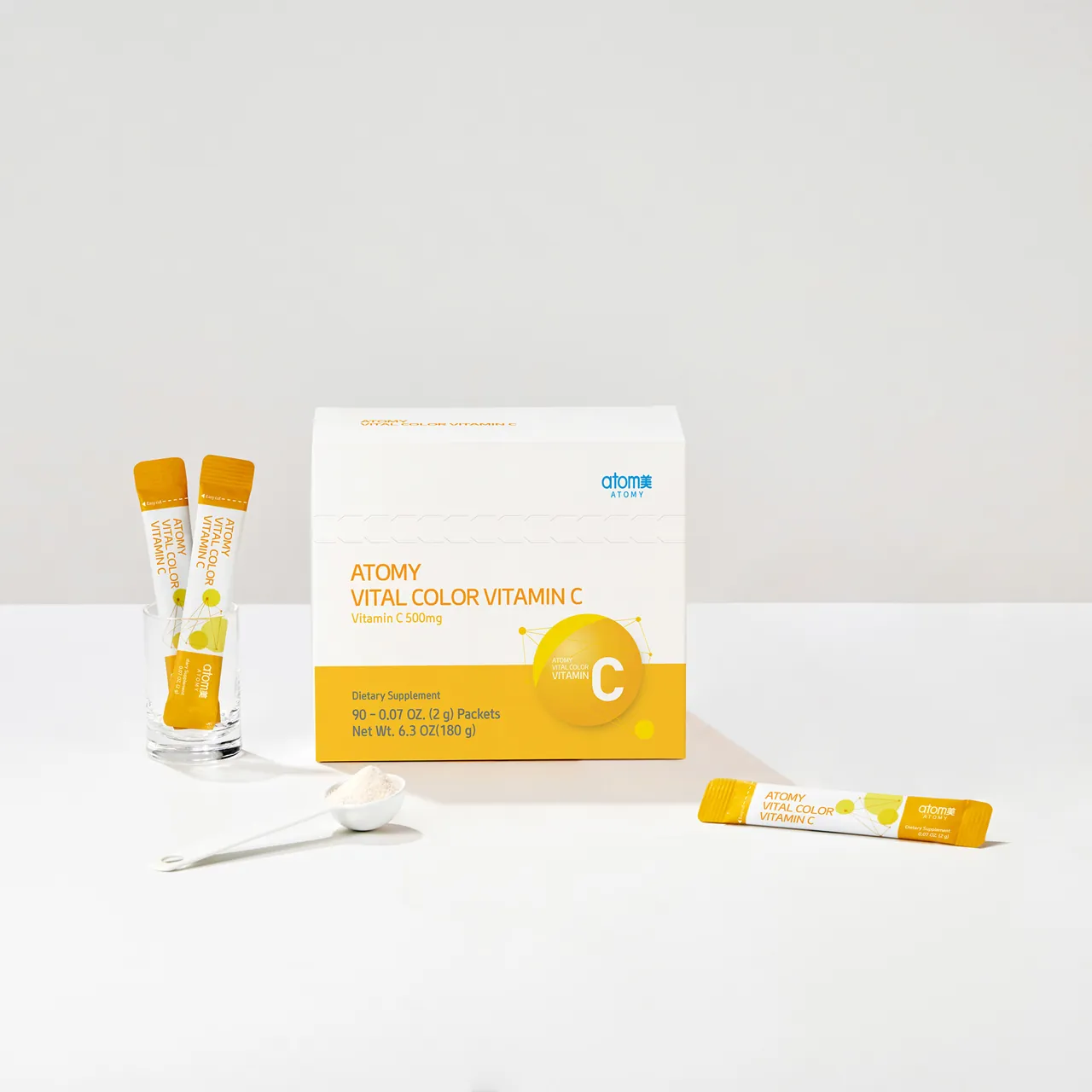
Your body needs vitamin C every day. We listed the full ingredients of the vitamin C powder from our catalog on a separate page.
See the vitamin C03What research says
Where the trials saw more
The Cochrane review found that taking vitamin C regularly does not reduce the number of colds, with one exception. In 5 trials there were 598 marathon runners, skiers and soldiers on exercises in the subarctic, people under heavy physical stress in the cold. Those of them who got vitamin C had half as many colds. This result can’t be applied to everyone, because these are special, small groups.
In 2023, the same authors looked separately at large doses, 1 g of vitamin C a day or more. They pooled 10 trials in healthy people and found that colds were 15% less severe on vitamin C. Vitamin C did not affect how long mild symptoms lasted. These authors have long argued for the benefits of vitamin C, so their work can’t be seen as an independent check of their own review.
The U.S. Institute of Medicine, whose calculations set the vitamin C recommendations in the United States, sums it up this way. Reviews of many studies, it writes, usually conclude that megadoses, meaning very large doses of vitamin C, do not affect how often people catch colds, but in some groups they give a modest benefit in how long and how bad colds are.
04What research says
People do run low on vitamin C

All these trials tested vitamin C on top of regular food. But there is the opposite question too. Does a person get enough vitamin C from what they eat? Measurements in different countries show that they don’t always.
The most severe lack of vitamin C leads to scurvy, a disease of the connective tissue, and as little as 10 mg a day prevents it. But whether you have enough vitamin C is judged by its level in the blood. The European Food Safety Authority (EFSA) calls a level above the scurvy threshold but below adequate “suboptimal,” with a risk of deficiency.
Measurements in Karelia showed what this looks like in real life. In the early 1990s, Finnish and Russian scientists measured vitamin C in the blood of men in two neighboring areas on either side of the border. In Pitkyaranta, Russia, 93% of men had a level that points to severe deficiency. In North Karelia, Finland, it was 2%.
The same areas were surveyed in the spring of 1992, 1997 and 2002. All three times, the average vitamin C level in men in Pitkyaranta stayed below the deficiency threshold. It was most strongly linked to whether people ate fruit every day.
This is one area, with data from the 1990s and early 2000s, so it can’t be applied to all of Russia today. We did not find recent large measurements for the country.
Deficiency is found in wealthy countries too. Among low-income households in the UK, 25% of men and 16% of women were deficient in vitamin C. In the U.S. in 2017–2018, it was 3.2% of adults.
What does a shortage mean if you’re nowhere near scurvy? Researchers name tiredness, low energy and irritability as possible signs of a shortage, which can appear when the vitamin C level in the blood is low.
People get vitamin C mainly from fruits and vegetables, and some also take it separately. We put together what’s in the vitamin C powder from our catalog on a separate page.
See the vitamin C05What research says
How much you need and why more isn’t better
So how much vitamin C does an adult need? Recommendations differ a little from country to country. In Russia it’s 100 mg a day. In Europe it’s 110 mg for men and 95 mg for women. In the U.S. it’s 90 and 75 mg, and U.S. guidelines add another 35 mg for people who smoke.
The body can’t fully absorb a big dose taken all at once. This was shown in a study by the U.S. National Institutes of Health (NIH), in which 7 men lived in a hospital for several months and got vitamin C in different doses. 200 mg at a time was fully absorbed, but starting at 500 mg the share absorbed dropped, and the body got rid of the excess.
Large doses have another side too. In three large U.S. observational studies, men who got 1,000 mg of vitamin C a day or more developed kidney stones 43% more often than those who got less than 90 mg. No such link was found in women, and vitamin C from food was not linked to stones. This is a link, not a cause.
Countries set the upper intake limit in different ways. In the Eurasian Economic Union (EAEU), which includes Russia, the upper permitted level of vitamin C in dietary supplements is 900 mg a day. In the U.S., the upper level applies to adults’ total intake, not just supplements, and is 2 g a day, because above that the risk of stomach and gut upset goes up. Europe has no upper level at all, since there wasn’t enough data to set one.
06Myths
What the studies did not show
- Myth
A big dose at the first sign stops a cold from taking hold
FactIn 7 comparisons where vitamin C was started after a cold had already begun, the trials found no consistent effect on how long it lasted or how bad it was.
Source 01 - Myth
If you take vitamin C all fall, you’ll get fewer colds
FactIn ordinary people, taking it regularly barely changed the number of colds, with a risk of 0.97 of the risk on placebo. Half as many colds were seen only in people under heavy physical stress in the cold.
Source 01 - See the vitamin C
- Myth
The bigger the dose, the more vitamin your body gets
FactIn a study of 7 men, 200 mg at a time was fully absorbed, but from 500 mg at a time absorption dropped, and the body got rid of the excess.
Source 11 - Myth
Vitamin C from the drugstore is worse than vitamin C from fruit
FactSynthetic and food vitamin C are chemically the same substance. Studies in people found no difference in blood levels of vitamin C.
Source 15 - See the vitamin C
- Myth
Nobody is short on vitamin C these days
FactIt happens even in wealthy countries. Among low-income households in the UK in 2003–2005, deficiency was found in 25% of men and 16% of women, and in the U.S. in 2017–2018 in 3.2% of adults.
Source 08
Once the myths are separated from what the studies actually found, it’s easier to look at any supplement calmly. How much vitamin C is in one packet of the powder from our catalog is shown on a separate page.
See the vitamin C07What to do
Vitamin C from food every day instead of a big dose
Don’t count on a big dose
When people started taking vitamin C after a cold had already begun, the trials found no consistent effect. In adults who took it regularly, colds were 8% shorter on average. They did not catch colds any less often, so the review authors don’t consider taking it regularly for that purpose justified.
Get vitamin C from food every day
In Karelia, the vitamin C level in the blood was most strongly linked to whether people ate fruit every day. The EAEU sanitary requirements list rose hips, sweet peppers, black currants, sea buckthorn, citrus fruits, kiwi and cabbage among the sources of vitamin C.
Know how much you need
U.S. guidelines say 90 mg of vitamin C a day for men and 75 mg for women, and 35 mg more for people who smoke. In Russia the norm for adults is 100 mg.
Don’t chase a big dose
Starting at 500 mg at a time, the body absorbs vitamin C less well. Kidney stones were found more often in men who got 1,000 mg a day or more. In the EAEU, the upper permitted level of vitamin C in dietary supplements is 900 mg a day.
If you eat few fruits and vegetables
Vitamin C is also sold as a supplement. Decide together with your doctor whether you need one.
These steps work with or without a supplement. If you decide to add vitamin C to your diet, everything about the vitamin C powder from our catalog is on a separate page.
See the vitamin C08Sources
What the sources actually say
A systematic review of placebo-controlled trials, doses of 0.2 g a day or more. In trials in the general population (10,708 people), the relative risk of a cold was 0.97. All 29 comparisons together had 11,306 participants. In 598 marathon runners, skiers and soldiers on exercises in the subarctic, the risk was 0.48. With regular use, colds in adults were 8% shorter. In 7 comparisons (3,249 colds) where vitamin C was started once the illness began, there was no consistent effect on duration or severity. The authors write that regular use in order to get sick less often is not justified.
15 comparisons from 10 trials with doses of 1 g a day or more in healthy people. Cold severity was 15% lower on vitamin C, with no significant effect on how long mild symptoms lasted. The authors are the same as those of the Cochrane review and have long argued for the benefits of vitamin C.
Recommended intake is 90 mg a day for men and 75 mg for women, 35 mg more for people who smoke. The tolerable upper intake level for adults is 2 g a day, based on stomach and gut upset. Reviews of many studies usually conclude that megadoses do not affect how often colds occur, but in some groups give a modest benefit in duration and severity.
10 mg of vitamin C a day prevents scurvy. A blood level above 10 but below 50 µmol/L points to suboptimal status with a risk of deficiency. Recommended intake is 110 mg a day for men and 95 mg for women.
- See the vitamin C
The physiological requirement for vitamin C for adults is 100 mg a day.
In 93% of men in Pitkyaranta (Republic of Karelia) and 2% in North Karelia (Finland), the vitamin C level in the blood pointed to severe deficiency. Measurements from the early 1990s, one area, men only.
In the spring of 1992, 1997 and 2002, the average vitamin C level in men in Pitkyaranta ranged from 2.5 to 8.0 µmol/L, against a deficiency threshold of 11. In North Karelia it ranged from 27.1 to 53.9. The level was most strongly linked to eating fruit every day.
Among the low-income population of the UK (2003–2005), 25% of men and 16% of women had a level that points to deficiency.
- See the vitamin C
According to a U.S. national survey, 2.7% of adults were deficient in vitamin C in 2003–2006 and 3.2% in 2017–2018.
When the vitamin C level in the blood drops below 23 µmol/L, signs of a shortage may appear, such as tiredness, low energy and mood changes like irritability.
7 healthy men lived in a hospital for several months and got vitamin C in different doses. 200 mg at a time was fully absorbed, with single doses of 500 mg or more, absorption went down, and the body got rid of the excess.
A follow-up of 40,536 men and 156,735 women. In men taking 1,000 mg of vitamin C a day or more, the risk of kidney stones was 43% higher than with less than 90 mg. No link in women, and vitamin C from food was not linked to stones. This is an observational study, not a trial.
- See the vitamin C
For adults, the adequate level of vitamin C in dietary supplements is 90 mg and the upper permitted level is 900 mg a day. Traditional sources of vitamin C listed include rose hips, sweet peppers, black currants, sea buckthorn, strawberries, citrus fruits, kiwi and cabbage.
There is not enough data to set a tolerable upper intake level for vitamin C. Taking more than 1 g a day barely increases absorption but raises the risk of digestive upset.
Synthetic and food-derived vitamin C are chemically identical. All steady-state studies in people showed no difference between them. The work was partly funded by a kiwifruit company, and the authors write that it had no influence on the content.
09Products
Vitamin C from our catalog
- R00121
Atomy Vital Color Vitamin C
Daily dose of vitamin C for antioxidant support. Vitamin C and 7 different fruit and vegetable extracts for a tangy mango flavor.
Description from the product page on us.atomy.com
Learn more
10Sign up
If you decide to buy, choose the country where you live
Sign-up and purchase happen on the Atomy website; we do not sell products, and Yandex Metrica counts visits only if you agree.