What the research says
Oxygen bleach or chlorine bleach — which is better for food and grass stains
Below we look at how the two kinds of bleach differ and how to get a stain out without ruining the fabric.
01The worry
A stain on the tablecloth, grass on your jeans — and you reach for the bleach
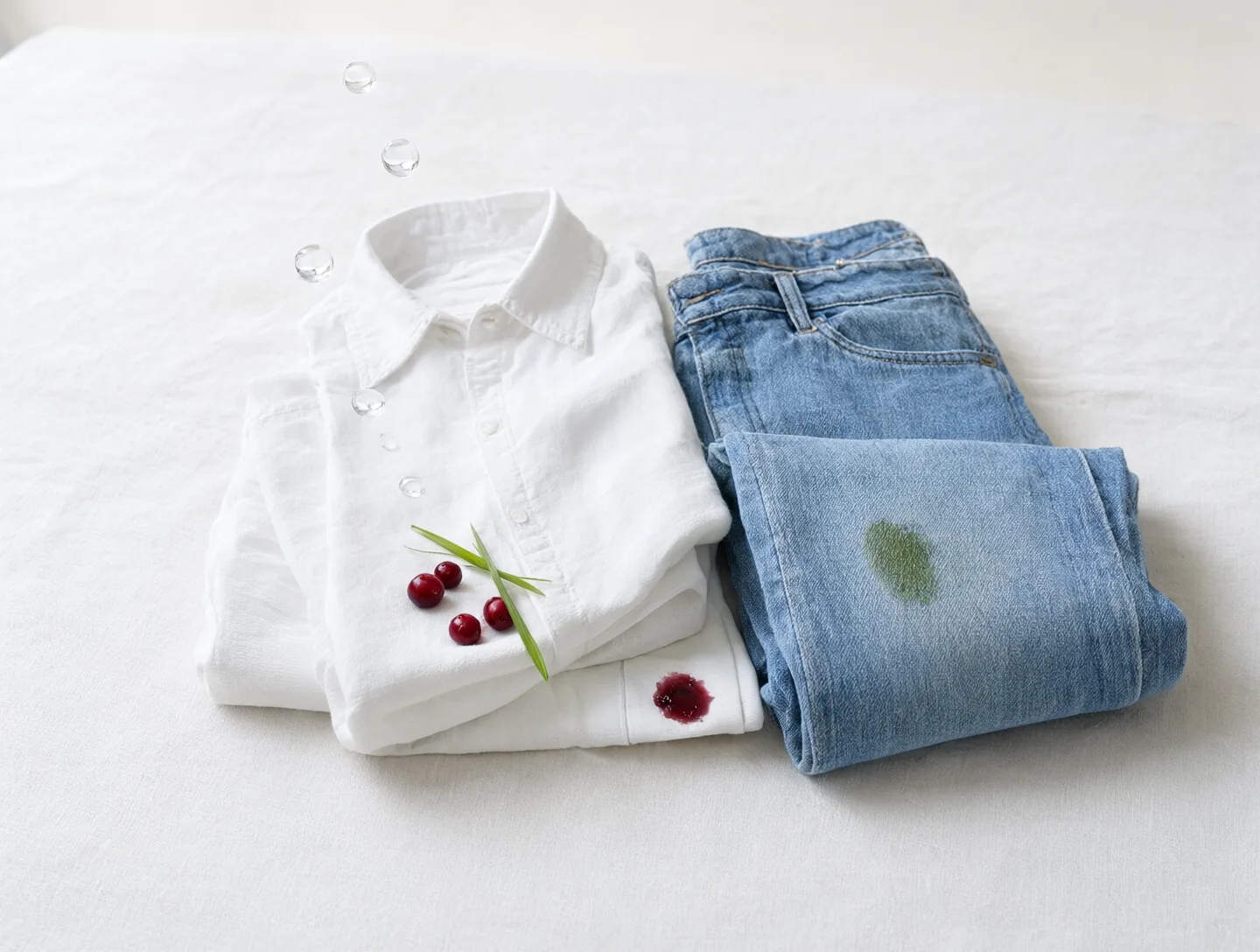
Thanksgiving and the holidays mean big family dinners. Drops of wine, cranberry sauce, tangerine juice and berries end up on the white tablecloth, and jeans come home with green knees after a game on a grassy field or a walk in the park in fall.
A lot of people grab chlorine bleach for this, the stuff most of us just call bleach. Then they go online and ask what to do about yellow and rusty spots, about holes and about clothes that are now only good for the trash.
Those posts aren't exaggerating. University laundry guides also write about yellowing and holes from bleach, and we'll cover that in detail in the next section.
We gathered laundry guides from American universities, lab experiments on fabric, clothing care label rules and warnings from the Centers for Disease Control and Prevention (CDC). Below we explain how bleach harms fabric, how oxygen bleach differs from chlorine bleach, why one stain needs cold water and another hot water, and what you should never do with bleach.
What people say online
- “I ruined a beige blazer with bleach”
- “Bleach whitens stuff right down to the holes”
- “How do I get red wine out of a white tablecloth after the holidays? The guests spilled everywhere.”
- “Splashed soup on my jeans, scrubbed them with detergent and a brush, and as they started to dry I could see the stains coming back”
- “Is it true you can wash any fabric with oxygen bleach? What about silk and wool?”
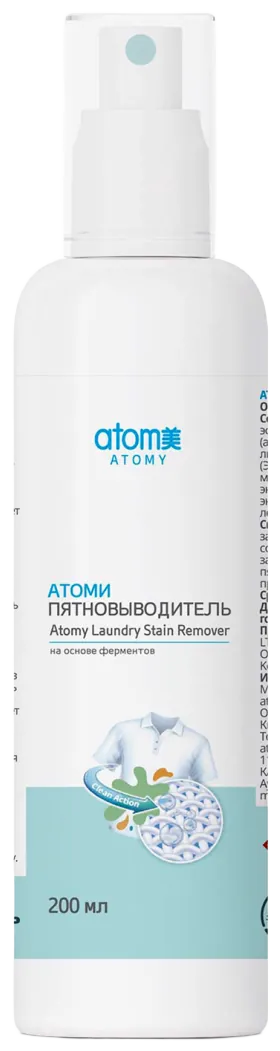
You can treat a sauce or wine stain before you even wash it. Our catalog has a stain remover, a spray with plant-based surfactants, which are cleaning agents, and 7 types of enzymes that break down dirt. It works on liquid marks and on fresh and old stains from coffee, food and makeup.
See the stain remover02Fabric
How bleach can ruin fabric with holes, yellowing and rust stains
Chlorine bleach takes the color out of a stain, but the fabric takes a hit too. A laundry guide from Texas A&M University advises using it only on white and colorfast clothes and warns that with frequent use it weakens fibers, especially cotton, so clothes wear out faster.
A 2023 lab experiment measured how much weaker cotton gets. Cotton fabric was washed in a chlorine solution, the way it's done in an industrial laundry. After just five washes the fabric could hold 16% less load before breaking, after ten washes 50% less and after a hundred 80% less. The fabric turned yellow, felt stiffer and sometimes tore with normal handling.
For comparison, the same cotton fabric after a hundred regular industrial washes got 29% weaker along the warp threads, which run the length of the fabric, and 15% weaker along the weft threads, which run across it. The author of this experiment writes that cotton is especially vulnerable to chlorine above 68 °F (20 °C).
But this was one fabric in a lab, and the solution was like an industrial laundry's, not like a wash at home. We don't apply these numbers directly to home laundry.
Bleach has other downsides too. A New Mexico State University guide says it can make some yellow stains worse and put holes in fabric, and with iron, which is sometimes in water, it leaves rust stains. According to a University of Kentucky guide, a rust stain becomes permanent after chlorine bleach.
Silk, wool and stretchy fabrics with spandex shouldn't be bleached with chlorine at all. All three university guides say so.
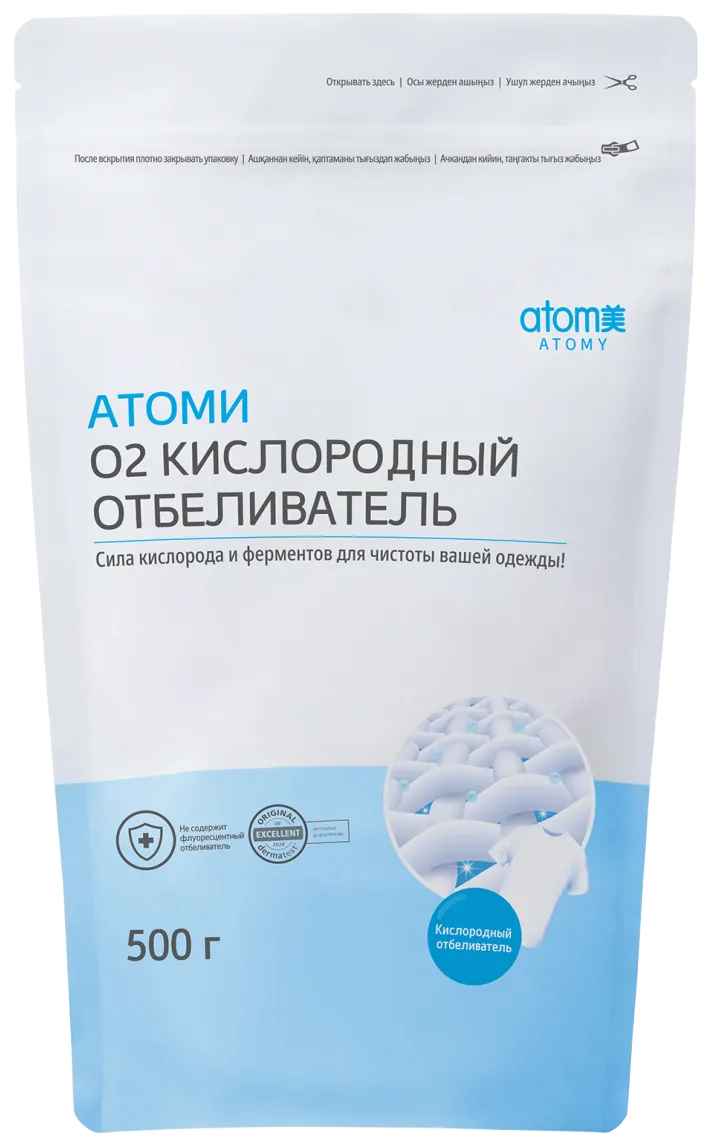
Chlorine isn't the only way to whiten fabric. We looked at the ingredients of the oxygen bleach in our catalog. It has sodium percarbonate, the bleach activator TAED and 5 kinds of enzymes, and it has no fluorescent brightener, meaning no optical brightener for fabric.
See the oxygen bleach03Oxygen
Is oxygen bleach the same as bleach? How it differs from chlorine bleach
No, they're different substances. Regular household bleach is chlorine bleach, and it's based on sodium hypochlorite. According to the UK Health Security Agency (UKHSA), household products contain up to 10% of it.
Oxygen bleach is based on something else, sodium percarbonate. In water it dissolves quickly and breaks down into sodium carbonate, also known as washing soda, and hydrogen peroxide. That's what HERA, a European risk assessment of percarbonate, says. The report was prepared by Solvay, a company that makes percarbonate.
Laundry detergents and laundry additives also often contain TAED, a bleach activator. Together with peroxide it forms peracetic acid in the wash water, and that acid oxidizes stains. According to HERA, in a typical European wash at 86 to 140 °F (30 to 60 °C), this reaction is done within 15 minutes.
To be fair, oxygen bleach has its weak spots too. The University of Kentucky guide says chlorine bleach works more strongly than oxygen bleach, though it can damage some fibers, dyes and finishes. And the New Mexico State University guide says most oxygen bleaches work best in hot water.
Hydrogen peroxide isn't completely harmless to fabric either. The author of the 2023 cotton experiment lists substances that release chlorine or hydrogen peroxide among the causes of fabric weakening. But in another lab experiment from 2021, 3% hydrogen peroxide was added to a low-temperature home wash, and the laundry didn't lose color and its tensile strength didn't change.
You don't have to bleach a whole garment because of one stain. Spray the stain 2–3 times with the stain remover from our catalog, and after 5 minutes wash the item with laundry detergent. Don't use it on wool, silk or leather.
See the stain remover04Water
Hot or cold water for grass and blood stains
Cold. The University of Kentucky guide sorts stains into groups and puts grass in the protein group along with blood, egg and milk. Fresh protein stains come out if you soak the item and swish it around in cold water before washing.
If you start with hot water, it "cooks" the protein. The protein sets between the fibers of the threads, and the stain gets harder to remove. The New Mexico State University guide advises soaking fresh blood, egg or ketchup stains in cool water for half an hour or longer and then rubbing them gently.
So green knees from a grassy field or a walk in the fall park go into a basin of cold water first, not into boiling water.
Hydrogen peroxide has its own trouble with blood. In the 2021 lab experiment, every test stain washed out better with peroxide except one, a mix of blood, milk and ink. The authors explain this by a reaction between the iron in hemoglobin, which is in blood, and the peroxide.
There are also enzyme products for protein stains. The Kentucky guide notes that enzymes digest protein and doesn't recommend these products for silk and wool.
For another group of stains, tannin stains, the rule is the opposite. They're left by plant compounds called tannins. The Kentucky guide lists stains from berries, including cranberries, raspberries and strawberries, from fruit juices, tea, coffee, tomato juice, beer and other alcoholic drinks in this group. According to the same guide, fresh tannin stains usually wash out with detergent in hot water if the fabric can take it, and old ones may need bleach to come out completely. So drops of cranberry sauce and juice on the holiday tablecloth, unlike grass on jeans, get washed in hot water if the fabric can handle it.
The oxygen bleach in our catalog has protease, an enzyme for protein stains. Its page lists 17 kinds of stains it was tested on in a regular wash at 104 °F (40 °C), including grass, milk and black coffee.
See the oxygen bleach05Heat
Can you iron or dry clothes if the stain didn't come out?
Not until the stain is gone. The New Mexico State University stain removal guide says plainly that heat sets stains, so fabric with a stain shouldn't be ironed or put in the dryer.
Here's a familiar story. Soup splashes on your jeans, you wash them with detergent and a brush, and as they dry the stains show up again. It's better not to iron them or put them in the dryer, but to treat the stain one more time.
It's easier to treat a stain before washing and drying. The stain remover in our catalog has 7 types of enzymes, including lipase for greasy stains and pectinase for stains from fruit, vegetables and makeup.
See the stain remover06Care label
Can you use oxygen bleach on colored clothes?
Yes, if the care label allows it. One of the care symbols is a triangle, and GINETEX, the European association for textile care labeling, explains it this way. An empty triangle allows any bleach, chlorine or oxygen, and a triangle with two diagonal lines allows only oxygen bleach, meaning non-chlorine bleach.
GINETEX advises against bleaching colored items with oxygen, including with an all-purpose detergent that contains it, unless the symbol allows it, or the color may change. American university guides are bolder about oxygen bleach and recommend it for colored fabrics too, but we stick with the cautious option and check the label.
The FTC's Care Labeling Rule in the US also separates two cases. If chlorine bleach would harm an item with regular use but non-chlorine bleach wouldn't, the label must say "Only non-chlorine bleach, when needed." If all bleaches would harm it, the label says "Do not bleach."
People often ask if you can wash any fabric with oxygen bleach, and the answer is no, not any fabric. Colored items can be bleached with it only if the label shows an empty triangle or a triangle with two diagonal lines, and if it says "Do not bleach," no bleach is right for it.
If the label allows oxygen bleach, take a look at the page for the oxygen bleach in our catalog. It lists amounts by laundry weight and says to dissolve the powder in water first instead of sprinkling it right on clothes, or the fabric may lose color.
See the oxygen bleach07Caution
Why you should never mix bleach with vinegar or ammonia
On its own, bleach gives off almost no gas under normal conditions. The UK agency UKHSA writes that poisoning from hypochlorite fumes is extremely rare, because bleach solutions don't release chlorine in noticeable amounts.
The danger starts when bleach is mixed with other products. According to UKHSA, hypochlorite releases chlorine gas with acids, and with ammonia-based solutions it forms chloramines, which irritate the airways. The CDC writes that mixing chlorine bleach with vinegar or ammonia, or heating a bleach solution, can produce chlorine and chloramines that can cause serious lung damage when inhaled.
If a stain needs more than one product, the New Mexico State University guide advises not mixing them, especially ammonia and chlorine bleach, and rinsing the fabric thoroughly in between.
Not everyone knows this. A CDC online survey in May 2020 included 502 adults in the US. Only 35% of them said bleach shouldn't be mixed with vinegar, and 58% said it shouldn't be mixed with ammonia. This survey was about what people know, not about what they do.
A CDC report describes a woman who filled a sink with a mix of a 10% bleach solution, vinegar and hot water to soak fruits and vegetables. A harsh chlorine smell filled the kitchen, she had trouble breathing, started coughing and wheezing, and called for emergency help.
The New Jersey Department of Health warns that even a small amount of chlorine irritates the eyes, nose and throat within a short time. At the same time, UKHSA notes that in most cases mixing bleach with acid doesn't release enough chlorine to harm health. There's no reason to test that on yourself, and the CDC puts it simply: don't mix household cleaning products.
This goes for oxygen products too. According to the same New Jersey warning, hydrogen peroxide mixed with vinegar forms peracetic acid, which can irritate the eyes, skin and lungs.
08Myths
Bleach, boiling water and oxygen for everything — what's true
- Myth
Oxygen bleach is the same thing as regular bleach
FactNo. Oxygen bleach is based on sodium percarbonate, which breaks down into washing soda and hydrogen peroxide in water, while regular bleach, according to the UK Health Security Agency (UKHSA), is based on sodium hypochlorite.
Source 07 - Myth
Chlorine bleach whitens more, so it's better for your clothes
FactThe University of Kentucky guide says chlorine bleach really is stronger than oxygen bleach but can damage some fibers, dyes and finishes. And the Texas A&M University guide adds that with frequent use it weakens cotton.
Source 02 - See the oxygen bleach
- Myth
You can use oxygen bleach on anything
FactColored clothes are bleached with oxygen only if the triangle on the label allows it, or the color may change. And under the US care labeling rule, if all bleaches would harm an item, the label says "Do not bleach," and then no bleach is right for it.
Source 10 - Myth
Blood and grass stains should go straight into hot water
FactProtein stains, which the Kentucky guide says include blood and grass, are soaked in cold water first. Hot water "cooks" the protein between the fibers, and the stain holds on tighter.
Source 02 - See the stain remover
- Myth
If it didn't come out the first time, I'll dry it and deal with it later
FactHeat sets stains. Fabric with a stain shouldn't be ironed or put in the dryer until the stain is gone.
Source 03 - Myth
Bleach with vinegar whitens better
FactMixing chlorine bleach with vinegar or ammonia, or heating it, can produce chlorine and chloramines, which can damage the lungs when inhaled. In a CDC survey of 502 US adults, only 35% said bleach shouldn't be mixed with vinegar.
Source 13
You can treat a stain before washing without mixing anything with bleach. The stain remover in our catalog has 7 types of enzymes, and each one works at its own temperature, from 50 to 86 °F (10 to 30 °C).
See the stain remover09What to do
How to get food and grass stains out without ruining the fabric
Check the label first
An empty triangle allows any bleach, a triangle with two diagonal lines allows only oxygen bleach, and "Do not bleach" rules out all of them.
Blood and grass go in cold water
Soak protein stains in cold or cool water for half an hour or longer, then rub gently. Hot water at the start "cooks" the protein.
Fresh tannin stains go in hot water
Tannin stains are left by plant compounds called tannins. The Kentucky guide puts stains from berries, fruit juices, tea, coffee, tomato juice and alcoholic drinks in this group. Fresh ones usually come out with detergent in hot water if the fabric can take it, and old ones may need bleach.
Don't iron or dry until the stain is gone
Heat sets stains. Don't put a stained item in the dryer or iron it.
Use chlorine bleach only on whites and colorfast clothes
Chlorine bleach is for white and colorfast clothes, and it shouldn't be used often, because with frequent use it weakens fibers, especially cotton.
Don't mix anything with bleach
Don't mix vinegar, ammonia or any other product with chlorine bleach, and don't heat it. If you use more than one product, rinse the fabric thoroughly in between.
Read the ingredients on the package
Under the Customs Union rules that apply in Russia, the ingredients must name oxygen-based or chlorine-based bleaching agents if there's more than 0.2% of them, and enzymes are always listed.
10Sources
What the sources actually say
Iron in water plus chlorine bleach leaves rust stains. Chlorine bleach makes some yellow stains worse and can put holes in fabric. Don't use chlorine bleach on silk, wool or spandex fabrics. Most oxygen bleaches work best in hot water. Soak fresh blood, egg and ketchup stains in cool water for half an hour or longer, then rub gently.
Fresh protein stains come out by soaking in cold water, and hot water "cooks" the protein between the fibers. Grass, blood, egg and milk are in the protein stain table. The tannin stain table lists alcoholic drinks, beer, berries (cranberry, raspberry, strawberry), coffee, fruit juices (apple, grape, orange), soft drinks, tea and tomato juice, washed with detergent in hot water. Fresh tannin stains usually wash out with detergent in hot water, and old ones may need bleach. Chlorine bleach is stronger than oxygen bleach but can damage some fibers, dyes and finishes, and it's not for silk, wool or spandex. Chlorine makes rust stains permanent. Enzyme products aren't for silk and wool, because enzymes digest protein.
Heat sets stains, so don't iron fabric with a stain or put it in the dryer. Don't mix stain removal products, especially ammonia and chlorine bleach, and rinse thoroughly between products.
Chlorine bleach is only for white and colorfast clothes. With frequent use it weakens fibers, especially cotton, and clothes wear out faster. Don't use bleach on silk, wool or spandex. Oxygen bleach is suitable for colored fabrics.
- See the oxygen bleach
Lab experiment with cotton fabric in a solution with free chlorine, as in an industrial laundry. Maximum load dropped by 16% after 5 washes, by 50% after 10 and by 80% after 100. The fabric turned yellow, got stiffer and sometimes tore. After 100 industrial washes it was 29% weaker along the warp and 15% along the weft. Cotton is especially vulnerable to free chlorine above 68 °F (20 °C). Substances that release chlorine or hydrogen peroxide play a part in fabric weakening.
Lab experiment, low-temperature home wash. With 3% hydrogen peroxide all standard soils washed out better except Empa 116 (blood, milk, ink), because the iron in hemoglobin reacts with peroxide. Peroxide didn't discolor the laundry and didn't affect tensile strength (5 repeats).
Sodium percarbonate dissolves quickly in water and breaks down into sodium, carbonate and hydrogen peroxide. Irreversible eye damage is possible only at concentrations above 25% if the eye isn't rinsed right away. The report was prepared by Solvay S.A.
TAED is a bleach activator in laundry products. With percarbonate it forms peracetic acid in the wash water, which oxidizes stains. Under European washing conditions (86–140 °F, 30–60 °C), the conversion is done within 15 minutes.
- See the stain remover
Household bleach contains up to 10% sodium hypochlorite. With acids it releases chlorine, though usually not enough to harm health, and with ammonia it forms chloramines that irritate the airways. Poisoning from breathing in the fumes is extremely rare, since chlorine isn't released in noticeable amounts under normal conditions.
The triangle shows whether an item can be bleached. An empty triangle allows any bleach, chlorine or oxygen, and a triangle with two diagonal lines allows only oxygen (non-chlorine) bleach. Don't bleach colored items with an oxygen product unless the symbol allows it, because the color may change.
If regular use of chlorine bleach would harm the item but non-chlorine bleach would not, the label must say "Only non-chlorine bleach, when needed." If all bleaches would harm it, the label must say "Do not bleach."
The ingredient list for consumers must name oxygen-based and chlorine-based bleaching agents if they make up more than 0.2%, and enzymes regardless of amount.
- See the oxygen bleach
Online survey of 502 US adults, May 2020. 35% said bleach shouldn't be mixed with vinegar and 58% with ammonia. Mixing with vinegar or ammonia and heating can produce chlorine and chloramines, which can cause serious lung damage when inhaled.
Case report. A sink filled with a mix of a 10% bleach solution, vinegar and hot water to wash produce, a harsh chlorine smell, trouble breathing, coughing, wheezing and a call for emergency help.
Bleach with ammonia forms chloramines, and with acid it forms chlorine. Even a small amount of chlorine irritates the eyes, nose and throat within a short time. Vinegar with bleach produces chlorine and chloramines. Hydrogen peroxide with vinegar forms peracetic acid, which can irritate the eyes, skin and lungs.
Household chlorine bleach can release chlorine gas when mixed with certain other cleaning products. Don't mix household cleaning products.
11Products
Oxygen bleach and stain remover from our catalog
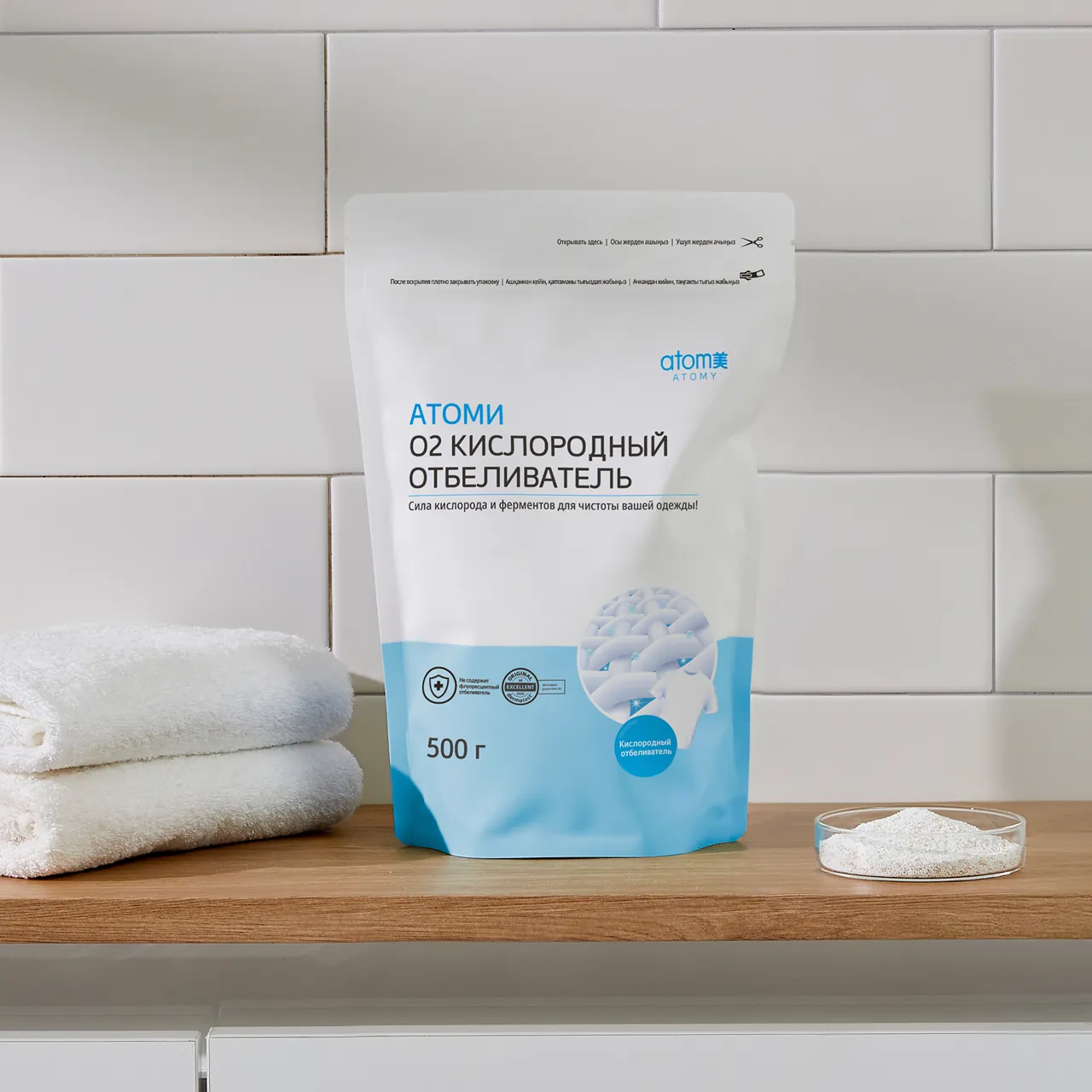 R02312
Atomy O2 Bubble Power Oxygen Bleach (500 g)
Oxygen and 5 enzymes lift tough stains and keep fabrics bright.
Description from the product page on atomy.ru
Learn more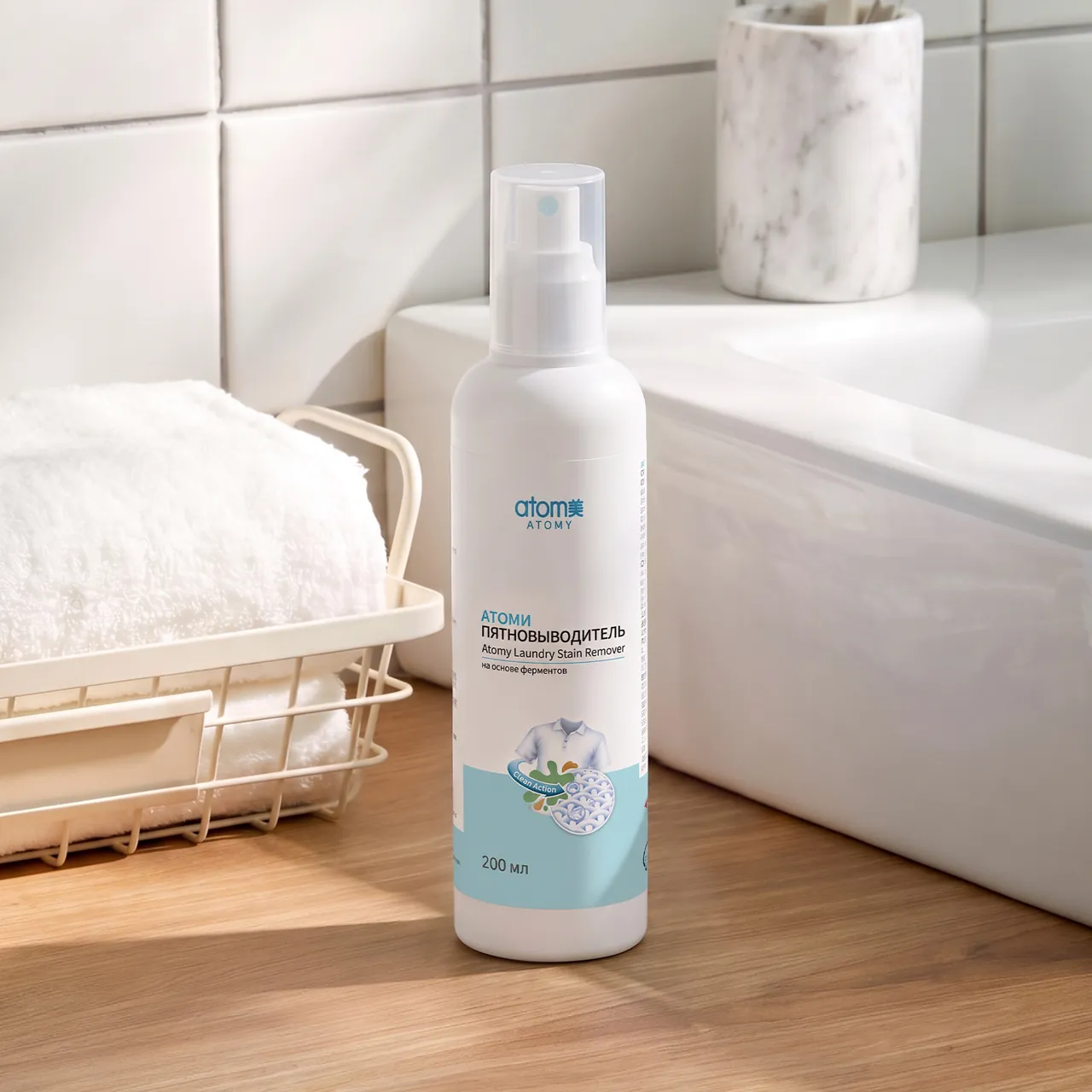 R02303
Atomy Laundry Stain Remover
A spray with 7 types of enzymes and plant-based surfactants. Works on liquid marks and on fresh and old stains from coffee, food and makeup.
Description from the product page on atomy.ru
Learn more
12Sign up
If you decide to buy, choose the country where you live
Sign-up and purchase happen on the Atomy website; we do not sell products, and Yandex Metrica counts visits only if you agree.