What the research says
How often to change your toothbrush and why. The "every three months" rule rests on dentists' opinion, and the signal to replace it is frayed bristles
Below we look at how often to change your toothbrush and why, how many germs live on it, whether you can heat it to disinfect it and whether you should keep it under a cap.
01The worry
Germs show up on a toothbrush after the very first use
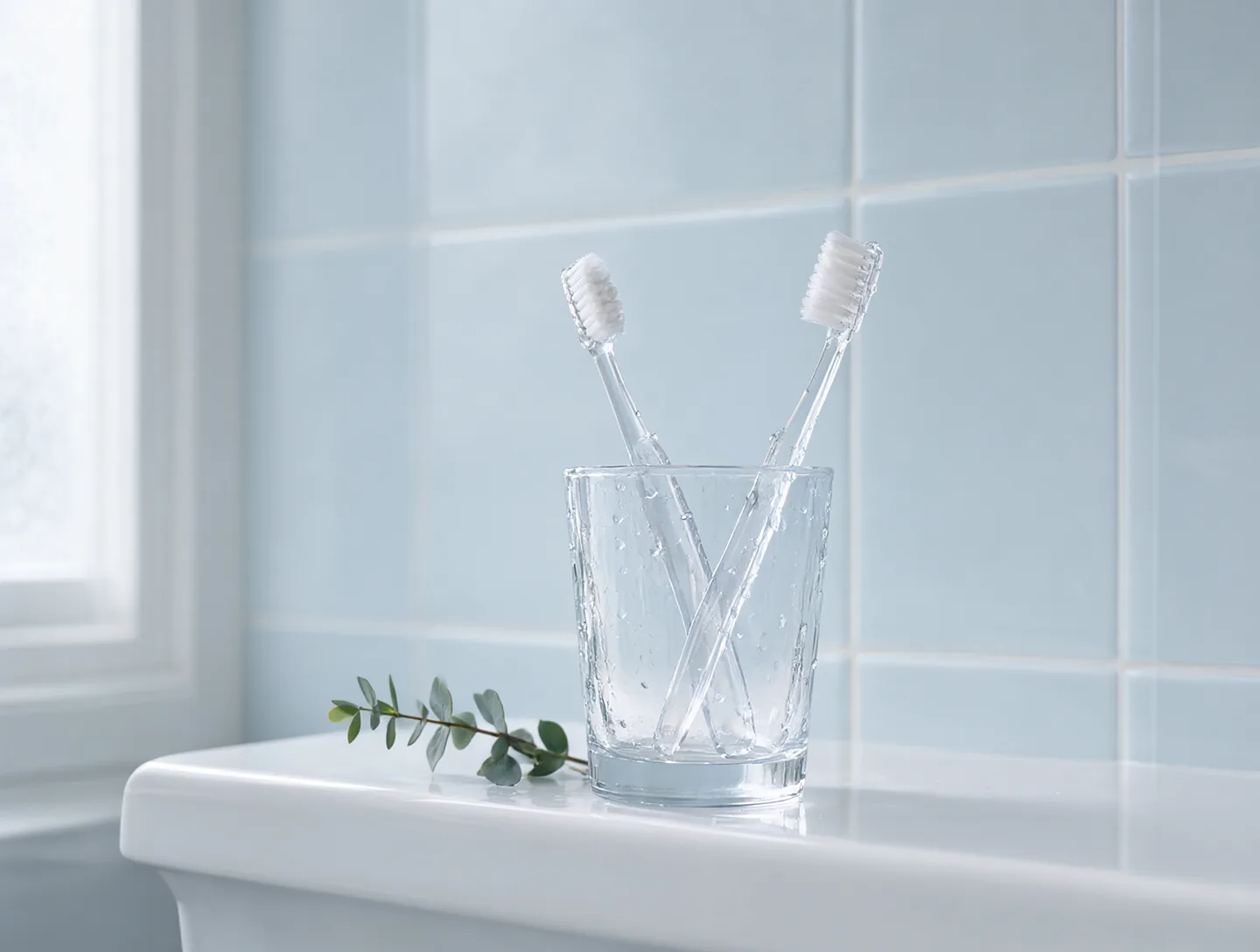
In November, when everyone around you is coughing and sneezing, you start eyeing the toothbrush in the cup with suspicion. It goes in your mouth twice a day, it sits wet in the bathroom for hours, and the whole family's brushes are crowded right next to it. How many germs are on it, and isn't it time to throw it out?
People ask about this all the time. How often should you change your toothbrush, and why every three months exactly? Can you disinfect an old one with heat instead of buying a new one? Is it bad to keep it under a cap or near the toilet?
We gathered dentists' guidelines and research on people.
On the germ question, scientists don't have comforting news. A systematic review, a summary of studies put together by strict rules, pooled 15 studies in 2024. It says a toothbrush gets contaminated after the very first use, and the longer you use it, the more germs there are on it.
What people say online
- “How often do you need to change your toothbrush? And what happens if you don't change it for a long time?”
- “honestly it's best every month, bacteria multiply in there”
- “i change it when the bristles go every which way and it stops getting between my teeth properly”
- “The bristles are synthetic, bacteria don't stick around on them, and once it dries out they're done for, no question.”
02Germs
Where the germs on a toothbrush come from and whether they do harm
Germs get onto a toothbrush from your mouth and from the bathroom itself. In a 2021 study, scientists read the DNA of the microbes on the toothbrushes of 34 people. By the authors' rough estimate, on average 47.2% of the microbes came from the person, almost all of them from the mouth. Some may have come from tap water and the film on the showerhead, and where another 37.1% came from stayed unknown.
Antibiotic resistance genes were found on these toothbrushes too. There were 158 families of these genes on the brushes and only 53 in the mouth samples. The authors call their work exploratory and write that it's built on links that still need to be tested.
The longer a toothbrush is in use, the denser the germs on it. A 2011 study looked at 40 toothbrushes. On the ones used for a month, the microbes sat one by one, and on the three-month-old ones they gathered in clusters. The authors called the hard buildup between the bristle tufts a spot where microbes grow.
That sounds alarming, but something else matters more. The American Dental Association (ADA), which brings together dentists in the US, writes that bacteria are found on toothbrushes, but there's no evidence that they harm your health. So from here on, this isn't about being afraid of germs. It's about when a toothbrush stops cleaning well and how to store it.
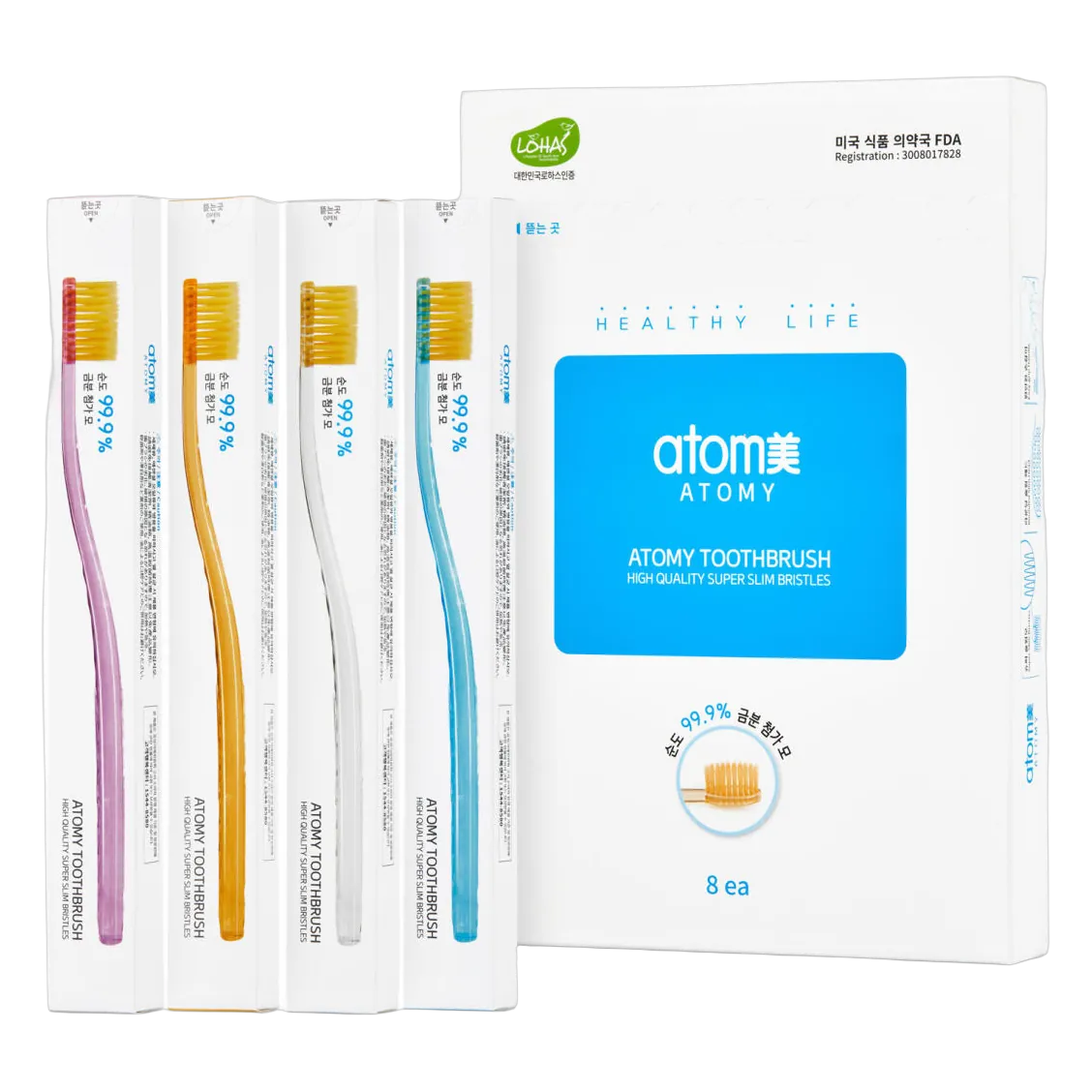
It's easier to change your toothbrush on time when a new one is already waiting in the cabinet. Our catalog has a set of eight toothbrushes. Its page covers what they're made of and how to care for them.
See the toothbrushes03Three months
The "every three months" rule rests on dentists' opinion
Almost everyone knows when you're supposed to replace a toothbrush. The ADA advises replacing it every three to four months, or sooner if the bristles are visibly matted or frayed. The second half of that advice matters more than it seems, and we'll come back to it.
The FDI World Dental Federation looked into where the time frame itself came from. In 2023, its working group searched for systematic reviews and went through 310 records from 2000 to 2022. They found no such reviews on replacing and storing a toothbrush.
The federation still advises changing your toothbrush every three to four months, sooner if the bristles are frayed and right after an infection or illness. 96% of the experts who answered the survey backed this advice, and the federation rated it as "good practice." That's what the FDI calls advice that doctors consider settled, even though there's no solid research behind it. We should note that the FDI itself is supported by the company Haleon.
The three-month time frame is still an agreement among doctors. You do need to replace your toothbrush, but it's worth looking at more than just the calendar.
04Wear
It's time for a new toothbrush when the bristles fray
What gives away a worn-out toothbrush has been tested on people. One study had 172 people, and each of them got three identical toothbrushes. They handed in each one after three months of brushing, and the scientists rated how worn it was. People who returned badly frayed toothbrushes had significantly more plaque on their teeth than people whose brushes were only a little worn or not worn at all. "Significantly" here means the difference is unlikely to be chance.
The same authors concluded that frayed bristles seem to be a better sign of when to replace a toothbrush than its age. It's time for a new one when the outer tufts spread wider than the base of the head. They also write that the advice to replace a toothbrush every two to three months doesn't seem to rest on solid scientific data.
In another study, a specialist did the brushing, and three-month-old toothbrushes removed plaque almost as well as new ones. The difference was too small to matter for your teeth. The authors think it seems to come down to how worn the toothbrush is, not how old it is.
A worn toothbrush does worst between the teeth. Two studies with toothbrushes from one large manufacturer, which probably funded them, showed this. One used a manual toothbrush and the other a battery-powered one, and people brushed with them twice a day for three months. Across the whole mouth, the worn manual toothbrush cleaned with no significant difference from a new one, but between the teeth the new one was significantly better. In the 15 people with the most worn battery-powered heads, there was a difference across the whole mouth too.
Over time, the bristles also get softer. In a trial with 80 students, bristles made of PBT plastic became significantly softer after two months and removed plaque less well, with both soft and medium toothbrushes. The authors write that these toothbrushes may lose effectiveness after just two months.
When the outer tufts spread wider than the base of the head, it's time for a new toothbrush. The set in our catalog has eight toothbrushes with a rounded slim head and super slim bristles with a 0.03 mm tapered end. Their design is laid out on a separate page.
See the toothbrushes05Myths
What people say about toothbrushes and what's actually known
- Myth
You can disinfect an old toothbrush with heat, in the microwave or in the dishwasher
FactThe ADA doesn't recommend putting a toothbrush in the microwave or the dishwasher, because that much heat can damage it.
Source 04 - Myth
If you soak your toothbrush in an antiseptic, there won't be any germs left on it
FactA 2026 summary of 41 studies found that 0.2% chlorhexidine, 50% white vinegar and ultraviolet light lower the number of germs on a toothbrush, but the authors rated their confidence in this evidence as very low. Another review, from 2019, found no significant result for chlorhexidine, so the studies disagree. The ADA writes that there's little data on disinfecting toothbrushes, and in one study soaking in 3% hydrogen peroxide or in mouthwash cut the number of bacteria by 85%.
Source 11 - See the toothbrushes
- Myth
Without a UV sanitizer, you can't keep a toothbrush clean
FactThe ADA writes that there's no evidence bacteria on toothbrushes cause harm. For people who still want a device, the ADA advises choosing one cleared by the U.S. Food and Drug Administration (FDA). Ultraviolet light lowered the number of germs in the 2026 summary, but confidence in that evidence is also very low.
Source 04 - Myth
Synthetic bristles don't hold bacteria, and once they dry out, the bacteria die
FactA review of 15 studies says a toothbrush gets contaminated after the very first use, and the longer you use it, the more contaminated it gets. Dryness really does make life harder for germs, and there's more on that below.
Source 01 - See the toothbrushes
- Myth
After a cold, you have to throw your toothbrush out right away or you'll get sick again
FactThe FDI advises replacing your toothbrush right after an infection or illness, but it rates this advice as "good practice," meaning doctors' opinion without solid research behind it. The ADA writes that there's no evidence bacteria on toothbrushes cause harm.
Source 05 - Myth
Your toothbrush is dirtier than a toilet
FactThe studies we gathered don't make that comparison. What's known is something else. In the study of 34 people's toothbrushes, on average 47.2% of the microbes on a toothbrush came from the person, almost all of them from the mouth.
Source 02
06The toilet
Flushing sends droplets into the air, but no one has measured how risky that is
In a lot of bathrooms, the toothbrush stands a couple of steps from the toilet, and that bothers many people. Scientists study the cloud of tiny droplets that rises when you flush. A systematic review published in 2023 picked 37 studies on toilets in hospitals and hotels out of 712 it found.
The authors of the review write that this cloud may increase contact with gut and airborne pathogens. But no one has measured the risk of catching something from it through touch or through the air yet.
Studies of the toothbrushes themselves near a toilet found different things. In the same 2011 study of 40 toothbrushes, ten had been in use for three months in bathrooms that also had a toilet. That's where Escherichia coli (E. coli) was found. In a 2025 study from India, none of the 36 toothbrushes had E. coli, and Enterococcus was on 7 of them.
In 2026, researchers checked 73 toothbrushes belonging to dental students. They found Enterococcus on 9 of them and Staphylococcus aureus on 4. Toothbrushes that were kept in the bathroom and had been in use for a month or longer were contaminated more often, but the authors note this only descriptively, without a strict comparison.
07Drying
A toothbrush needs to dry, and in a closed case it stays wet
The main thing you can do for your toothbrush at home is let it dry. The ADA writes that a wet toothbrush in a closed container is more likely to grow microbes than one left in the open air. That's why the ADA advises storing your toothbrush upright after brushing and letting it air-dry.
The FDI gave the same advice, to store a toothbrush upright and let it air-dry, and 88% of the experts backed it. Like the replacement time frame, it's "good practice," meaning doctors' opinion.
The review of 15 studies names extra moisture from a plastic cap and keeping the toothbrush in the toilet area among the causes of contamination. A cap put on a wet toothbrush keeps it damp.
But the studies disagree. In that same 2025 study from India, in bathrooms that also had a toilet, Enterococcus was found on 2 of 9 toothbrushes with a cap and on 5 of 9 without one, so there were fewer such toothbrushes under a cap. The authors themselves write that the sample was too small to draw conclusions.
08What to do
How often to change your toothbrush and how to store it
Look at the bristles, not just the calendar
The ADA advises replacing your toothbrush every three to four months, or sooner if the bristles are matted or frayed. It's time for a new one when the outer tufts spread wider than the base of the head.
Stand your toothbrush upright and let it dry
That's what the ADA and FDI advise. On a toothbrush that dries in the open air, germs have a harder time growing than on a wet one in a closed case.
Don't put a cap on a wet toothbrush
The review of 15 studies names moisture from a plastic cap as one of the causes of toothbrush contamination.
Don't heat your toothbrush in the microwave or dishwasher
The ADA warns that that much heat can damage a toothbrush, and there's little data on disinfecting toothbrushes.
Use only your own toothbrush
The ADA writes that sharing a toothbrush can lead to swapping germs between people, and the FDI advises not sharing one even within the family.
If you have a choice, keep your toothbrush out of the toilet area
The review names the toilet area among the causes of toothbrush contamination, although no one has measured how risky the flush cloud is.
Buy a sanitizer only if you want one
The ADA sees no evidence that bacteria on a toothbrush cause harm, and for people who want a device, it advises choosing one cleared by the FDA.
The set in our catalog has eight toothbrushes. Their handles come in four colors, white, yellow, pink and blue.
See the toothbrushes09Sources
What the sources actually say
A toothbrush gets contaminated after the very first use, and the level of contamination grows with use. Causes named include extra moisture from a plastic cap and placement in the toilet area. A systematic review of 15 studies from January 2012 to May 2022.
Metagenomes of 34 people's toothbrushes. On average 47.2% of the microbes on a toothbrush came from the person, almost all from the mouth, 10.6% from tap water, 5.2% from showerhead biofilms, and 37.1% were of unknown origin. The estimates are approximate. The toothbrushes carried 158 families of antibiotic resistance genes, the mouth 53. The analysis is exploratory and based on correlations.
40 toothbrushes, 20 each from bathrooms with and without a toilet, 10 each in use for 1 and 3 months. E. coli was found on toothbrushes used for 3 months and kept in bathrooms that also had a toilet. On one-month toothbrushes the microbes were scattered, on three-month ones they formed clusters. The hard buildup between bristle tufts is a spot where microbes grow.
Replace your toothbrush every three to four months, or more often if the bristles are visibly matted or frayed. A wet toothbrush in a closed container is more likely to grow microbes than one in the open air. Store it upright and let it air-dry. Bacteria are found on toothbrushes, but there's no evidence they harm health. Sharing a toothbrush leads to an exchange of body fluids and microbes. Microwaving or putting it in the dishwasher isn't recommended, because heat can damage the toothbrush. There's little data on disinfecting toothbrushes. In one study, soaking in 3% hydrogen peroxide or mouthwash lowered the number of bacteria by 85%. Use only an FDA-cleared device.
- See the toothbrushes
Replace your toothbrush every 3–4 months, or more often if the bristles are matted or frayed, and right after an infection or illness (96% agreement). Store it upright and let it air-dry (88%). Don't share a toothbrush within the family. Rated "good practice," meaning doctors consider the advice settled but there's no solid research. There are no systematic reviews on this question. 310 records from 2000 to May 2022, and 25 experts responded to the draft. The work was supported by FDI, which is supported by Haleon.
172 participants, each with three identical toothbrushes after 3 months. People who returned toothbrushes with severe wear had significantly more plaque than people who returned toothbrushes with no visible or slight wear. Splayed bristles seem to be a better sign of when to replace a toothbrush than its age. When the outer tufts are wider than the base of the head, it's time to replace it. Advice to replace every 2–3 months doesn't seem to rest on solid scientific data.
Brushing was done by a specialist. There was no clinically relevant difference in plaque removal over 2 minutes between 3-month-old manual toothbrushes and new ones. The degree of wear, not the age of the toothbrush, seemed to decide the loss of effectiveness.
Two studies, a manual and a battery-powered toothbrush from one large toothbrush manufacturer, twice a day for three months. Across the whole mouth there was no significant difference, and between the teeth the new toothbrush was significantly more effective than the worn one. In the 15 participants with the most worn battery-powered heads, the difference was significant both across the whole mouth and between the teeth. The work was probably funded by the manufacturer.
- See the toothbrushes
80 participants (students), soft and medium PBT toothbrushes. Plaque removal after 2 months was significantly lower than at the start in both groups. PBT toothbrushes may become less effective after two months.
80 participants. The bristle stiffness of soft and medium PBT toothbrushes dropped significantly after two months of use (measured by ISO 22254).
41 studies, 8 randomized trials and 33 non-randomized. 0.2% chlorhexidine and 50% white vinegar showed a very large effect, and ultraviolet light a statistically significant one. Overall confidence in the evidence is very low.
Another meta-analysis of toothbrush disinfection, from 2019. Chlorhexidine showed a non-significant result in it, and the data were very heterogeneous.
- See the toothbrushes
36 toothbrushes. In bathrooms with a toilet, Enterococcus was on 2 of 9 toothbrushes with a cover (cap) and on 5 of 9 without one, and on 7 of 36 in total. E. coli wasn't found in any of the 4 groups. Because the sample is small, no conclusions can be drawn.
73 dental students' toothbrushes. Enterococcus on 9 of 73, Staphylococcus aureus on 4 of 73. Descriptively, contamination was higher on toothbrushes kept in the bathroom and on those used for a month or longer.
A systematic review that picked 37 studies of flush bioaerosols in hospitals and hotels out of 712 found. This is a route that may increase contact with gut and airborne pathogens. The risks of transmission through contact and through the air haven't been measured.
10Products
A toothbrush set from our catalog
- R00510
Atomy Toothbrush, set of 8
Atomy Toothbrush has soft, super slim bristles with a 0.03 mm tapered end, made with 99.9% pure gold powder. The head is rounded and slim, and there are 8 toothbrushes in a set. Do not place the toothbrush in boiling water to sanitize it.
Description from the product page on us.atomy.com
Learn more
11Sign up
If you decide to buy, choose the country where you live
Sign-up and purchase happen on the Atomy website; we do not sell products, and Yandex Metrica counts visits only if you agree.