What the research says
How many cups of coffee a day is safe? Regulators in Europe, the U.S. and Canada count caffeine, not cups, and set the limit at 400 mg a day. In people with high blood pressure, caffeine raises it for a few hours
In November mornings start in the dark, and for a lot of people the first cup of coffee is how they wake up. By evening it adds up to three or four cups, and then you start to wonder if that's too much and if coffee raises your blood pressure. Below we look at how much caffeine a day is considered safe for a healthy adult, how much is in a cup of instant and brewed coffee and how long coffee raises blood pressure.

01The worry
Is it bad to drink coffee every day?
Is it bad to drink coffee every day? People have been asking each other for years and getting opposite answers. Some are sure coffee raises blood pressure and that you can't have it at all if yours is high. Others say coffee actually lowers their blood pressure. Some people call instant coffee "dirty water" that doesn't raise blood pressure, and others think instant is exactly the kind that does.
The worry isn't completely off. Caffeine, the substance in coffee that wakes you up, really does raise blood pressure. You can see it in trials, studies where people get caffeine or coffee and are compared with what happens without it. How much and for how long, we'll explain in the blood pressure section. There are also people who should talk to their doctor about how much coffee to drink, and they get their own section too.
We gathered the assessments of the European Food Safety Authority (EFSA), the U.S. FDA and Health Canada, reviews that pull together many studies on blood pressure and sleep, and the position of the International Society of Hypertension. Along the way we'll point out where the sources agree and where they don't.
What people say online
- “Does coffee raise your blood pressure or lower it?”
- “After the second cup I get the jitters...”
- “How many cups of coffee can you have a day without hurting your health?”
- “How many hours before bed can I drink coffee and still sleep okay?”
- “Does 3-in-1 coffee raise blood pressure? Everyone says it's not coffee, it's just chemicals. How many packets can I have”
- “if I drink it at night.. I'm up half the night”
02The limit
The daily coffee limit is about caffeine, not cups
Regulators measure a safe amount of coffee in caffeine, not in cups. In 2015 the European Food Safety Authority (EFSA) concluded that up to 400 mg of caffeine a day, spread out over the day, doesn't raise safety concerns for a healthy adult. For a single dose, EFSA considers up to 200 mg safe.
North America came to the same number. The U.S. Food and Drug Administration (FDA) calls 400 mg a day an amount that isn't generally associated with negative effects in most adults. Health Canada gives adults the same maximum, 400 mg a day.
It matters that EFSA is talking about caffeine from all sources. That means tea counts too, not just coffee. A 220 mL (about 7.5 oz) cup of black tea has about 50 mg of caffeine, based on EFSA's examples.
The FDA also warns that people vary a lot in how sensitive they are to caffeine and how fast they clear it from the body. Too much caffeine, according to the FDA, can cause a fast heart rate, palpitations, higher blood pressure, insomnia, anxiety and jitters. For regulators, 400 mg is the upper limit for a healthy adult, not an amount you need to reach.
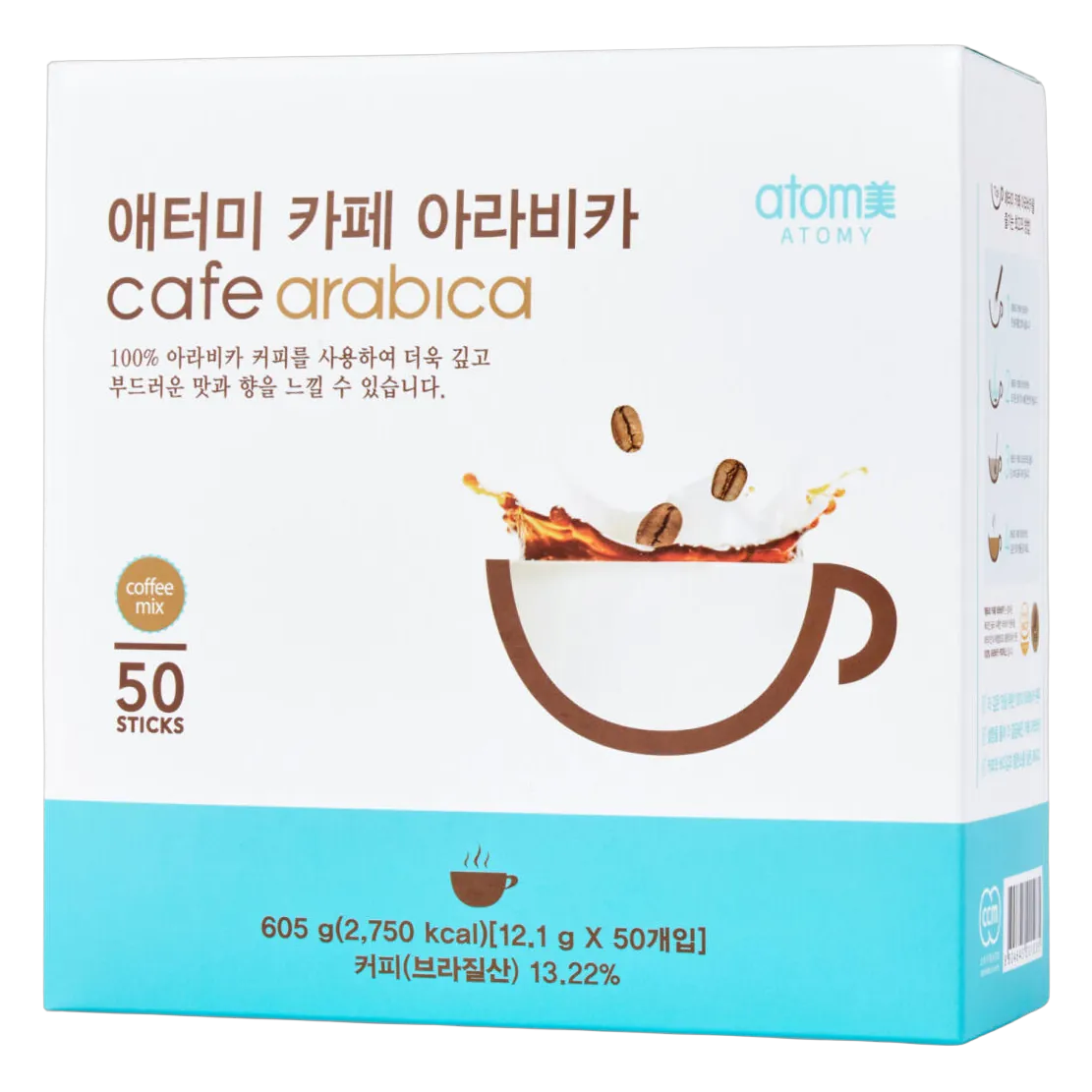
If your day starts with a cup, you want it to taste good. Our catalog has a coffee mix with 100% Arabica coffee beans and milk casein, made for a rich and mild flavor.
See Cafe Arabica03The cup
How much caffeine is in a cup of coffee, and in instant coffee?
To compare your coffee with the limit, you need to know how much caffeine is in a cup. But a "cup" is a poor measure here. EFSA warns that all the caffeine numbers it gives for drinks are approximate, because both the caffeine in a drink and the serving size vary within countries and between them.
Health Canada has a table for a 237 mL (8 oz) cup. A cup of brewed coffee has about 135 mg of caffeine, the same cup of instant coffee has 76 to 106 mg, and ground coffee from a drip machine has 179 mg.
EFSA's European examples use smaller servings. A 60 mL (2 oz) espresso has about 80 mg of caffeine, and a 200 mL (about 7 oz) cup of filter coffee has about 90 mg. So a small espresso has almost as much caffeine as a 200 mL cup of filter coffee.
The FDA's cup is bigger than the Canadian and European ones. When the FDA turns 400 mg into coffee, it talks about two or three 12-ounce cups, about 355 mL each, not the small cups many people picture.
Instant coffee usually has less caffeine than brewed coffee in a cup of the same size, but it does have caffeine. The regulators' tables don't back up the idea that instant coffee has "zero caffeine."
04Blood pressure
Does coffee raise blood pressure, and for how long?
It does, but for a few hours. In 2011 a review of trials in people with high blood pressure came out. In five trials, 200 to 300 mg of caffeine at once raised systolic pressure, the top number, by an average of 8.1 mmHg, and diastolic pressure, the bottom number, by 5.7. The rise started within the first hour and lasted at least three hours.
In three studies from the same review, people drank coffee for two weeks and were compared with a caffeine-free diet or with decaf. No rise in blood pressure was found in them. The authors write that the available data don't support a link between drinking coffee long term and higher blood pressure in people with hypertension.
Interestingly, coffee and pure caffeine don't act the same way. In a review of 16 trials with 1,010 participants, pure caffeine raised systolic pressure by an average of 4.16 mmHg, while coffee raised it by only 1.22. The authors conclude that regular caffeine does raise blood pressure, but when it comes from coffee, its effect is small.
What about people who've been drinking coffee for years? That's a question for observational studies, which follow people for many years and look at who develops high blood pressure. In a review of ten such studies with 243,869 participants, the risk of hypertension was 2% lower with each extra cup a day. In another review of four studies with 196,256 participants, people who drank one or two cups a day had the same risk of hypertension as people who didn't drink coffee.
But not all reviews agree. In a review of six observational studies with 172,567 participants, hypertension was 9% more common in people who drank one to three cups a day than in those who drank less than one cup, and no higher risk was found in people who drank more than three cups. The authors of another review, from Mayo Clinic, call the evidence on coffee and blood pressure low quality and make no recommendation for or against it.
In a 2024 paper, the International Society of Hypertension writes that moderate regular coffee, three or four cups a day, doesn't have a harmful effect on blood pressure.
Since the reviews don't agree, we sum up carefully. In people with high blood pressure, caffeine raises it for a few hours, and in most observational studies hypertension is no more common in coffee drinkers. Observational studies show a link, but they don't prove cause.
For a lot of people coffee is a habit that lasts for years, and a habit usually comes with a favorite flavor. The coffee mix in our catalog uses 100% Arabica coffee beans from Brazil, the world's largest coffee producer, for a well-balanced, rich and delicate flavor.
See Cafe Arabica05Myths
Is instant coffee bad for you, and other coffee myths
- Myth
Coffee dehydrates you, so you need a glass of water with every cup
FactIn one study, 50 men who were used to coffee drank four 200 mL cups of coffee a day for three days and water for three other days. Total body water didn't change on the coffee days or the water days, and it didn't differ between them. Only men were tested, and the study was paid for by the Institute for Scientific Information on Coffee (ISIC), an organization that studies coffee and health.
Source 17 - Myth
Instant coffee is just chemicals, not real coffee
FactIn the British UK Biobank observational study of 449,563 participants, heart and blood vessel disease was no more common in people who drank instant coffee than in people who didn't drink coffee, and the same was true for ground coffee. This is an observational study, not proof. Researchers from a company that makes instant coffee itself found negligible amounts of cafestol in instant coffee. Cafestol is the substance that makes boiled coffee and Turkish coffee raise cholesterol.
Source 18 - See Cafe Arabica
- Myth
If you drink coffee every day, it doesn't raise your blood pressure anymore
FactNot everyone builds a tolerance. In lab tests, tolerance to caffeine's effect on blood pressure develops in only about half of people who get it regularly. In a trial with 85 men and women, people with weak tolerance had daytime blood pressure that was 2.8 and 2.2 mmHg higher on average in the week they took 300 mg of caffeine a day in capsules than in the week with empty capsules.
Source 11 - Myth
In Russia the caffeine limit is 150 mg a day
FactIn the Unified Sanitary Requirements of the Eurasian Economic Union, which apply in Russia, 150 mg is the upper allowed level of caffeine in dietary supplements and specialized foods. It's a limit for those products, not a daily amount for coffee and tea. For a healthy adult, EFSA, the FDA and Health Canada give up to 400 mg of caffeine a day.
Source 20
06Sleep
How many hours before bed should you stop drinking coffee?
Caffeine works longer than you might think. In the CRAVE trial, published in 2023 in the New England Journal of Medicine (NEJM), 100 adults wore an ECG recorder and a wristband for two weeks. Every day a text message randomly told them whether to drink caffeinated coffee that day or skip it.
On coffee days, participants slept 36 minutes less on average than on caffeine-free days. They also took 1,058 more steps on coffee days.
A 2023 review of 24 studies found something similar. Caffeine cut sleep by an average of 45 minutes, and deep sleep went down by 11.4 minutes. By the review authors' estimate, you should have coffee no later than 8.8 hours before bed if you don't want it to cut your sleep short. The cup they used for this estimate had 107 mg of caffeine in 250 mL (about 8.5 oz). If you go to bed at 11 p.m., that puts your last cup at around 2 p.m.
EFSA also warns that even 100 mg of caffeine can affect how long and how well some adults sleep, especially if they have it shortly before bed.
People often drink coffee at work or on the go, not at home. Each serving of the coffee mix in our catalog comes in its own packet. Put it in a mug, add hot water up to 100 mL and stir.
See Cafe Arabica07Your doctor
Who should talk to a doctor about coffee
For a healthy adult, the conclusions above still stand. The International Society of Hypertension writes that three or four cups of coffee a day don't harm blood pressure. But the same paper also gives an exception.
It's the Japanese JACC observational study, which followed 18,609 people aged 40 to 79 for almost 19 years. In people with grade 2 or 3 hypertension, which is more severe than early grade 1 hypertension, two or more cups of coffee a day were linked to a 2.05 times higher risk of death from heart and blood vessel disease than in people who didn't drink coffee. No such link was found in people with normal blood pressure or with grade 1 hypertension.
This is an observational study, and it doesn't prove that coffee itself is the cause. But blood pressure experts themselves cite these data as a counterexample.
So if you have high blood pressure or heart disease, decide together with your doctor how much coffee to drink and whether to drink it at all. We don't give treatment advice here.
08Sugar
Coffee with sugar or without, is there a difference?
A lot of people like their coffee sweet, and people who drink 3-in-1 packets say those have the most sugar. Scientists have studied sugar in coffee too. In the British UK Biobank observational study of 171,616 participants who had no heart disease or cancer at the start, researchers compared unsweetened and sweetened coffee for about seven years.
Unsweetened coffee in any amount was linked to a lower risk of death from all causes. A moderate amount of sweetened coffee was also linked to a lower risk, but in people who drank more than 4.5 cups of sweetened coffee a day, that link was no longer seen. This is an observational study, and it doesn't prove that sugar itself is the cause.
The International Society of Hypertension lists moderate amounts of unsweetened coffee and tea among healthy drinks. The World Health Organization (WHO) counts as free sugars all the sugar added to food and drinks by the manufacturer, the cook or the person eating. According to the WHO, cutting free sugars to below 5% of calories, about 25 g or 6 teaspoons a day, has additional health benefits.
If you keep an eye on the sugar in your cup, check the label first. The coffee mix in our catalog lists 5 g of added sugars per packet, and its page has the full nutrition facts.
See Cafe Arabica09What to do
How to drink coffee every day and stay within the limit
Count caffeine, not cups
EFSA, the FDA and Health Canada give up to 400 mg of caffeine a day for a healthy adult, and EFSA considers up to 200 mg at once safe. Caffeine from all sources counts, including tea.
Find out how much caffeine is in your cup
According to Health Canada's table, a 237 mL (8 oz) cup of instant coffee has 76 to 106 mg of caffeine, and brewed coffee has about 135 mg. Based on EFSA's examples, a 60 mL espresso has about 80 mg, a 200 mL filter coffee about 90 mg and a 220 mL cup of black tea about 50 mg.
Look at the size of your cup
A big mug and a small cup give you different amounts of caffeine. The cup in the FDA's numbers holds about 355 mL (12 oz).
Know when coffee gets in the way of sleep
The authors of a review of 24 studies say coffee should be had no later than 8.8 hours before bed, and EFSA notes that even 100 mg of caffeine shortly before bed can affect sleep.
Notice how caffeine affects you
People differ in how sensitive they are to caffeine. The FDA lists a fast heart rate, palpitations, jitters, anxiety and insomnia among the signs of too much caffeine.
Watch the sugar in your cup
The International Society of Hypertension calls moderate amounts of unsweetened coffee a healthy drink. The WHO sees a health benefit in cutting free sugars to below 5% of calories, about 25 g a day.
10Sources
What the sources actually say
Single doses of caffeine up to 200 mg from all sources don't raise safety concerns for the healthy adult population. Up to 400 mg a day, spread over the day, doesn't raise safety concerns for healthy adults, except pregnant women. 100 mg of caffeine may affect sleep duration and sleep patterns in some adults, especially when taken close to bedtime. A 60 mL espresso has about 80 mg, a 200 mL filter coffee about 90 mg and 220 mL of tea about 50 mg. All the numbers are approximate, since caffeine content and serving sizes vary within and between countries.
For most adults, the FDA calls 400 mg a day, about two or three 12-fluid-ounce cups of coffee, an amount not generally associated with negative effects. People vary a lot in how sensitive they are to caffeine and how fast they clear it. Too much caffeine can cause a fast heart rate, palpitations, higher blood pressure, insomnia, anxiety and jitters.
For adults (18 and older), 400 mg a day. 237 mL of brewed coffee has 135 mg, 237 mL of instant coffee has 76 to 106 mg and 237 mL of ground coffee from a drip filter has 179 mg.
In 5 trials, 200 to 300 mg of caffeine raised systolic blood pressure in people with hypertension by an average of 8.1 mmHg and diastolic by 5.7. The rise was seen in the first hour and lasted at least 3 hours. In 3 studies lasting 2 weeks, no rise in blood pressure was seen with coffee compared with a caffeine-free diet or decaf. The data don't support a link between long-term coffee drinking and higher blood pressure in people with hypertension.
- See Cafe Arabica
16 randomized trials, 1,010 participants. The rise in blood pressure was bigger for caffeine (systolic 4.16 mmHg, diastolic 2.41) than for coffee (systolic 1.22, diastolic 0.49). Regular caffeine intake raises blood pressure, but when caffeine comes from coffee, its effect on blood pressure is small.
Eight articles (10 studies), 243,869 people. The risk of hypertension went down by 2% with each additional cup of coffee a day.
Four studies, 196,256 participants. One or two cups of coffee a day, compared with no coffee, were not associated with the risk of hypertension.
6 cohorts, 172,567 participants. With 1 to 3 cups a day, the relative risk of hypertension was 1.09 compared with less than 1 cup. More than 3 cups a day was not associated with a higher risk.
- See Cafe Arabica
Low-quality evidence showed no significant effect of coffee on blood pressure or the risk of hypertension. No recommendation can be made for or against coffee when it comes to blood pressure.
Moderate regular coffee (three to four cups a day) has no harmful effect on blood pressure or the cardiovascular system. A Japanese study reported that more than two cups of coffee a day raised the risk of death from cardiovascular disease in people with grade 2 or 3 hypertension. The table of healthy drinks includes moderate amounts of unsweetened coffee and tea.
In lab tests, tolerance to caffeine's blood pressure raising effect develops in only about half of regular users. 85 men and women, a four-week double-blind trial, capsules with 0, 300 or 600 mg of caffeine a day. In the weak-tolerance group, daytime blood pressure on 300 mg a day was 2.8 and 2.2 mmHg higher than in the placebo week.
The Japanese JACC cohort study, 18,609 participants aged 40 to 79, median follow-up 18.9 years. In people with grade 2 or 3 hypertension, 2 or more cups of coffee a day had a hazard ratio of 2.05 for death from cardiovascular disease compared with non-drinkers. No such link was found in people with optimal, normal or high-normal blood pressure or grade 1 hypertension.
- See Cafe Arabica
The CRAVE randomized trial, 100 adults, 14 days. Text messages randomly told participants to drink caffeinated coffee or avoid caffeine, and they wore an ECG recorder and a wristband. On coffee days, 397 minutes of nighttime sleep vs. 432 (a mean difference of 36 minutes) and 10,646 steps vs. 9,665 (a difference of 1,058).
A systematic review and meta-analysis of 24 studies. Caffeine cut total sleep time by 45 minutes and deep sleep by 11.4 minutes. To avoid cutting sleep short, coffee (107 mg per 250 mL) should be had no later than 8.8 hours before bed.
UK Biobank, 171,616 participants without cardiovascular disease or cancer, median follow-up 7 years. Unsweetened coffee in any amount was associated with a lower risk of death from all causes. Moderate sweetened coffee was also associated with a lower risk of death. At more than 4.5 cups of sweetened coffee a day, the estimate was 1.05 (no link).
Free sugars are sugars added to food and drinks by the manufacturer, cook or consumer, plus sugars in honey, syrups and fruit juices. Cutting them to below 5% of calories, about 25 g (6 teaspoons) a day, would provide additional health benefits.
- See Cafe Arabica
50 men who usually drank 3 to 6 cups of coffee a day, two three-day phases with four 200 mL servings of coffee or water a day. Total body water didn't change and didn't differ between the phases. In men used to caffeine, moderate coffee hydrated as well as water. The study was paid for by the Institute for Scientific Information on Coffee (ISIC).
UK Biobank, 449,563 participants, 12.5 years of follow-up. Decaf, ground and instant coffee, especially 2 to 3 cups a day, were associated with significant reductions in new cardiovascular disease and death.
Instant and drip filter coffee contained negligible amounts of cafestol and kahweol. This explains why boiled coffee and Turkish coffee raise cholesterol and instant coffee doesn't. The authors work at the Nestlé Research Centre.
Appendix 5 lists daily intake levels of food and biologically active substances for adults in specialized foods and dietary supplements. For caffeine, the adequate level is 50 mg and the upper allowed level is 150 mg.
11Products
Arabica coffee from our catalog
 R00973
Atomy Cafe Arabica 50
A premium coffee mix with 100% Arabica coffee beans and milk casein. Rich, mild flavor in 50 packets.
Description from the product page on us.atomy.com
Learn more
12Sign up
If you decide to buy, choose the country where you live
Sign-up and purchase happen on the Atomy website; we do not sell products, and Yandex Metrica counts visits only if you agree.